James McNeill Whistler
1834 – 1903
Nocturnes, harmonies and the etched river - the art of James McNeill Whistler
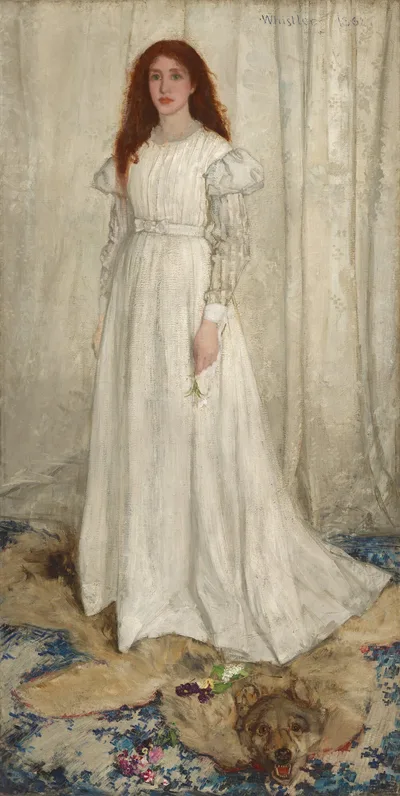 The White Girl, 1861
Signature Work
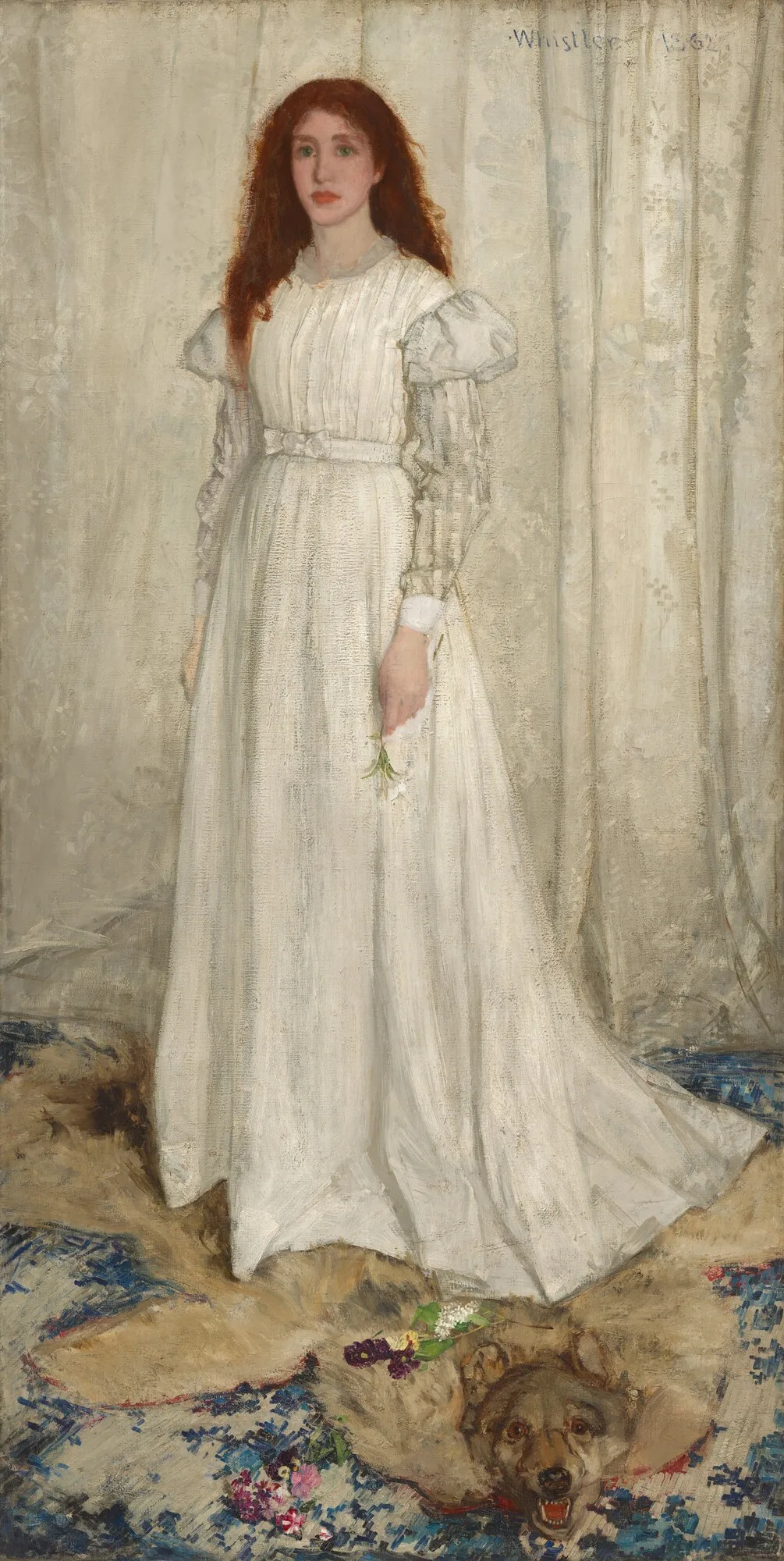
The White Girl, 1861
oil on canvas; Harris Whittemore Collection
James Abbott McNeill Whistler was born on July 10, 1834, in Lowell, Massachusetts, the first child of the railway engineer George Washington Whistler and Anna McNeill Whistler. He later preferred to disown the mill town altogether - "I shall be born when and where I want, and I do not choose to be born in Lowell," he declared during his libel action against John Ruskin - and the cosmopolitan childhood that followed gave him some excuse. In the winter of 1842-43 the family joined his father in St. Petersburg, where Tsar Nicholas I had engaged him to design a railway, and at eleven the boy was enrolled in drawing classes at the Imperial Academy of Arts.
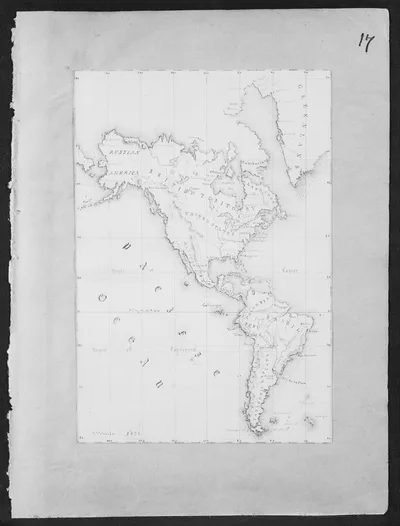
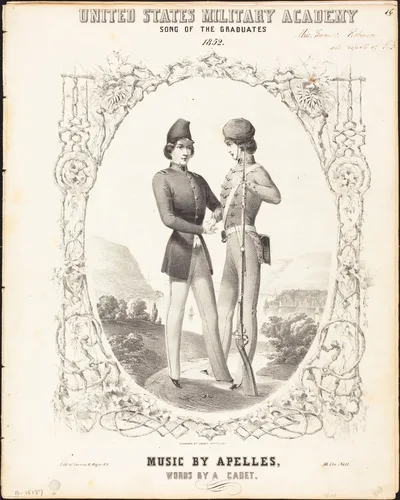
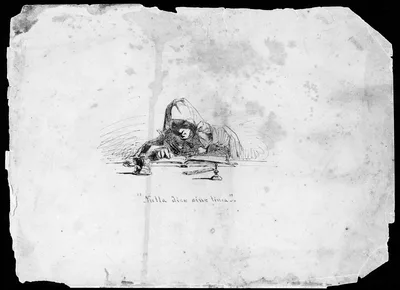
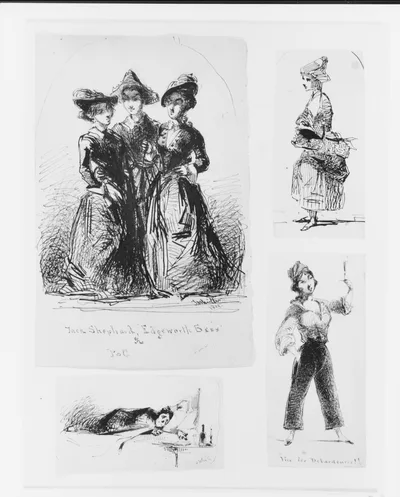
After his father died of cholera, the family returned to the United States. In July 1851 Whistler entered the U.S. Military Academy at West Point, where his drawing was admired and his discipline was not; after three years he was dismissed under the superintendency of Robert E. Lee. A short spell as a draftsman with the U.S. Coast Survey in Washington followed. It lasted only a couple of months in the etching division, but it taught him to bite a copper plate - the archive includes his doodle-strewn Sketches on the Coast Survey Plate - and he never stopped etching afterward.
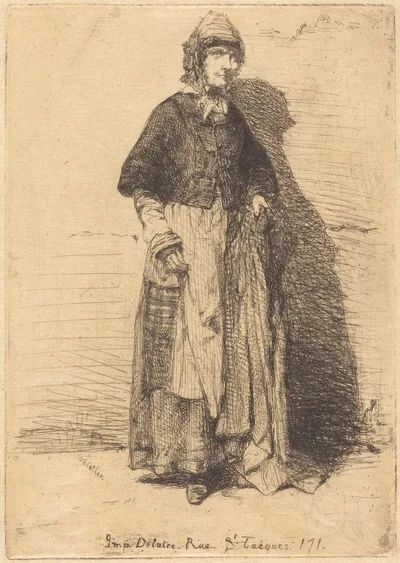
In 1855 he sailed for Paris, studied in the atelier of Charles Gleyre, and fell in with the realist circle around Gustave Courbet and Henri Fantin-Latour. A walking tour through northern France and the Rhineland in 1858 produced his first published set of prints, Twelve Etchings from Nature, printed with Auguste Delâtre and soon known simply as the French Set; La Mère Gérard, a study of an elderly Parisian woman, was among his earliest exhibited works. In 1859 he settled in London, which remained his base for most of his life, and began etching the working wharves of the Thames at Wapping, Rotherhithe and Limehouse.
His model and companion of the 1860s, the Irish-born Joanna Hiffernan, posed for Symphony in White, No. 1: The White Girl. The Royal Academy rejected the picture in 1862; it was then shown in Paris at the Salon des Refusés of 1863, where French painters admired what many English critics dismissed as unfinished. From 1866 Whistler lived in Chelsea, and after a voyage to Valparaíso that year he turned to the twilight river views his patron Frederick Leyland encouraged him to call nocturnes. Arrangement in Grey and Black No. 1, the portrait of his mother painted in 1871, was grudgingly accepted by the Royal Academy; the French state bought it in 1891 and it now hangs in the Musée d'Orsay.
For Leyland's London house Whistler transformed a dining room designed by Thomas Jeckyll to display Chinese blue-and-white porcelain into Harmony in Blue and Gold: The Peacock Room (1876-77). The quarrel over his fee ended the friendship, and Whistler blamed Leyland for much of his later financial distress. In 1877 John Ruskin, reviewing the Grosvenor Gallery, accused him of asking two hundred guineas for "flinging a pot of paint in the public's face" in Nocturne in Black and Gold: The Falling Rocket. Whistler sued for libel. At the trial of November 25-26, 1878, the jury found in his favour but awarded a single farthing in damages and the costs were divided; by May 1879 he was bankrupt.
Rescue came from the Fine Art Society, which commissioned twelve etchings of Venice. Whistler arrived in September 1879 for what was meant to be a three-month stay and remained some fourteen months, returning with plates, pastels and a new, sparer way of seeing the city through its back canals, doorways and lagoon horizons. Venice, a Series of Twelve Etchings appeared in 1880, and A Set of Twenty-Six Etchings followed in 1886. In February 1885 he delivered his manifesto of art for art's sake, the Ten O'Clock lecture, and the following year, on June 1, 1886, he was elected president of the Society of British Artists.
On August 11, 1888, Whistler married Beatrice (Beatrix) Godwin, widow of the architect E. W. Godwin and herself an artist. In 1890 he collected his letters, trial testimony and polemics as The Gentle Art of Making Enemies. The couple lived partly in Paris, in a house and garden on the rue du Bac that appear in his late lithographs, until Beatrice's illness brought them back to London, where she died in 1896. Two years later Whistler became the first president of the International Society of Sculptors, Painters and Gravers. He died in London on July 17, 1903, and was buried in Chiswick Old Cemetery.
"No. I ask it for the knowledge I have gained in the work of a lifetime."
— James McNeill Whistler